Resistance Band Rehabilitation
Resistance Band Rehabilitation is a physiotherapy exercise approach that uses elastic resistance bands to improve muscle strength, joint stability, flexibility, coordination, and functional movement. Resistance bands provide adjustable levels of resistance and can be used for different muscle groups throughout the body, making them useful during various stages of rehabilitation.
They are particularly helpful when a patient needs controlled strengthening after an injury, surgery, period of inactivity, or when returning gradually to normal physical activity. Exercises can be progressed by changing the band resistance, movement direction, repetitions, range of motion, or exercise position.
How Resistance Band Rehabilitation Works
The physiotherapist first assesses your strength, joint mobility, movement control, symptoms, and functional limitations. Based on the assessment, suitable resistance-band exercises are selected.
The band creates resistance as it is stretched, requiring the muscles to work against an external force. Exercises may be performed slowly and with controlled movement to improve both strength and coordination.
Rehabilitation can begin with lighter resistance and simpler movements. As strength and control improve, progressively stronger bands and more challenging exercises can be introduced.
Conditions That May Benefit
Depending on the clinical assessment, resistance band rehabilitation may be incorporated into treatment for:
- Muscle weakness
- Joint instability
- Shoulder rehabilitation
- Knee rehabilitation
- Hip weakness
- Ankle rehabilitation
- Sports injuries
- Post-surgical rehabilitation
- Reduced muscle strength following immobilization
- Movement-control problems
- General physical deconditioning
Benefits of Resistance Band Rehabilitation
When appropriately prescribed, resistance band exercises may help:
- Improve muscle strength
- Increase muscular endurance
- Improve joint stability
- Enhance movement control
- Improve coordination
- Support functional rehabilitation
- Progress strength gradually
- Improve exercise tolerance
- Prepare the body for higher-level physical activity
- Support a return to work, exercise, or sports
Resistance bands also allow exercises to be performed in different directions, making them useful for muscles that control joint movement and stability.
Common Resistance Band Exercises
Your physiotherapist may select exercises according to your specific rehabilitation needs.
Shoulder Strengthening:
Band exercises can target the rotator cuff and shoulder stabilizing muscles.
Hip Strengthening:
Exercises such as resisted side steps or hip movements can help strengthen the muscles around the hip and pelvis.
Knee Rehabilitation:
Controlled resistance exercises can strengthen muscles supporting the knee, including the quadriceps and hamstrings.
Ankle Strengthening:
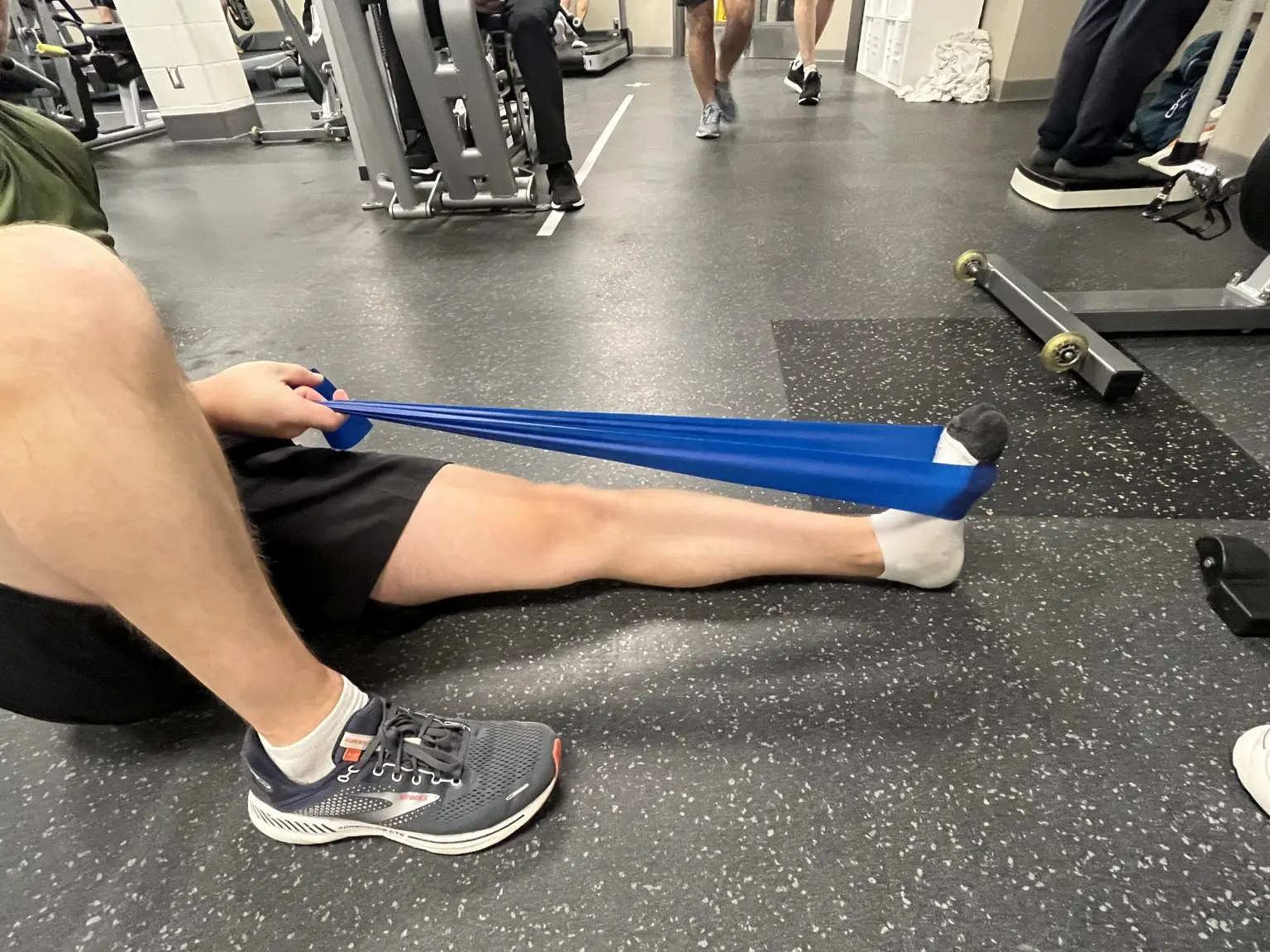
Resistance bands can be used for controlled ankle movements in different directions to improve strength and stability.
Upper-Limb Strengthening:
Band exercises can target the arms, shoulders, wrists, and surrounding muscles.
What to Expect During Treatment
Your physiotherapist will demonstrate the correct way to position the band and perform each movement.
You will be guided on:
- Correct posture
- Band placement
- Movement direction
- Appropriate resistance
- Repetitions and sets
- Controlled movement speed
- Safe range of motion
The therapist monitors your technique to ensure that the intended muscles are being appropriately challenged without unnecessary stress on the affected area.
Resistance Band Rehabilitation After Injury
After an injury, muscles around the affected joint may become weaker because of pain, reduced activity, or immobilization. Resistance bands provide a convenient way to gradually reintroduce resistance.
For example, following an ankle injury, rehabilitation may begin with gentle band-assisted ankle movements and progress toward stronger resistance, balance exercises, calf strengthening, and functional activities.
The progression depends on the injury and stage of healing.
Resistance Band Rehabilitation After Surgery
Following certain surgeries, strengthening needs to be introduced gradually. Resistance bands can provide a controlled form of resistance once the patient has reached the appropriate stage of rehabilitation.
The physiotherapist follows the relevant medical or surgical guidelines and progresses the exercises according to healing, strength, movement quality, and functional ability.
Resistance Band Training for Sports Rehabilitation
Athletes may use resistance bands during different phases of rehabilitation to rebuild strength and movement control.
Exercises can progress from basic muscle activation to more demanding activities such as:
- Lateral band walks
- Single-leg strengthening
- Resisted running drills
- Shoulder stability exercises
- Rotational exercises
- Dynamic lower-limb movements
- Sport-specific resistance exercises
The goal is to gradually prepare the body for the physical demands of the athlete's sport.
Resistance Band Therapy and Functional Training
Resistance bands can also be incorporated into functional exercises that replicate everyday movements. Depending on your goals, your physiotherapist may use resistance during squatting, stepping, reaching, lifting, walking, or rotational movements.
This helps bridge the gap between isolated strengthening exercises and practical daily activities.
Personalized Resistance Band Rehabilitation
The appropriate resistance level depends on your current strength, injury, movement ability, and rehabilitation stage. Using excessive resistance too early can compromise exercise technique and place unnecessary stress on recovering tissues.
At our physiotherapy clinic, Resistance Band Rehabilitation is customized according to your condition, strength level, activity requirements, and recovery goals. Our physiotherapists use progressive resistance exercises to improve strength, stability, coordination, and functional movement while supporting a safe return to everyday activities, work, exercise, and sports.