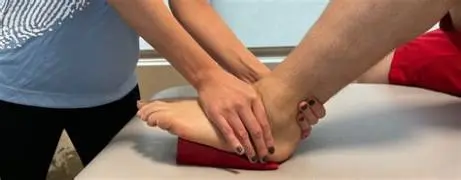
Ankle Joint Mobilization
Ankle Joint Mobilization is a hands-on physiotherapy technique used to improve the mobility, flexibility, and functional movement of the ankle joint. The ankle plays an important role in walking, running, jumping, climbing stairs, maintaining balance, and absorbing forces during everyday activities. Following an injury, prolonged immobilization, surgery, or periods of reduced movement, ankle stiffness can develop and affect normal movement patterns.
During ankle joint mobilization, a trained physiotherapist applies controlled manual movements to the ankle and surrounding joints. The technique is selected according to the patient's condition, movement limitations, symptoms, and rehabilitation goals.
How Ankle Joint Mobilization Works
The physiotherapist first evaluates ankle movement, joint range of motion, muscle flexibility, swelling, strength, balance, and functional activities such as walking or squatting.
Once a restriction is identified, the therapist stabilizes the appropriate structures and applies specific manual movements. These may include gentle joint gliding, traction, oscillatory movements, or passive range-of-motion techniques.
The direction and intensity of mobilization are carefully selected based on the type of restriction and the patient's tolerance. The aim is to improve comfortable movement without unnecessarily stressing the joint.
Conditions That May Benefit
Depending on the clinical assessment, ankle joint mobilization may be incorporated into rehabilitation for:
- Ankle stiffness
- Reduced ankle range of motion
- Ankle sprain rehabilitation
- Post-injury joint stiffness
- Recovery following appropriate ankle surgery
- Stiffness following immobilization
- Certain sports-related ankle injuries
- Reduced dorsiflexion
- Walking-related movement restrictions
- Functional balance and mobility problems
Benefits of Ankle Joint Mobilization
When clinically appropriate, ankle mobilization may help:
- Improve ankle joint mobility
- Increase comfortable range of motion
- Reduce stiffness
- Improve ankle flexibility
- Support better walking mechanics
- Improve movement during squatting and stair activities
- Prepare the ankle for strengthening exercises
- Support balance and functional rehabilitation
- Assist with a gradual return to physical activity
Improved ankle mobility can be particularly important for activities that require the ankle to move forward over the foot, such as walking, running, and squatting.
What to Expect During Treatment
Before treatment, the physiotherapist assesses the ankle and identifies specific movements that are restricted.
You will be positioned comfortably while the therapist supports your lower leg and foot. Controlled manual movements are then applied to the appropriate joint.
You may feel gentle pressure, stretching, or movement around the ankle. The therapist monitors your response and adjusts the technique according to your symptoms and tolerance.
Ankle Mobilization After an Ankle Sprain
Ankle sprains can sometimes result in swelling, stiffness, reduced range of motion, and difficulty placing weight through the affected leg. Once appropriate for the stage of healing, joint mobilization may be incorporated into rehabilitation to help restore movement.
Treatment is typically combined with ankle strengthening, balance training, proprioception exercises, and progressive weight-bearing activities to restore overall ankle function.
Ankle Mobilization After Immobilization
After a period of casting, bracing, or reduced movement, the ankle may become stiff and the surrounding muscles may become weaker.
Rehabilitation can gradually restore mobility and strength through a combination of joint mobilization, active range-of-motion exercises, stretching, strengthening, and functional activities.
The timing and intensity of manual treatment depend on the underlying injury and healing stage.
Ankle Mobilization for Sports Rehabilitation
Athletes require good ankle mobility and control for running, jumping, landing, cutting, and rapid changes of direction. Restricted ankle movement can affect lower-limb mechanics and make certain movements more difficult.
For athletes, ankle mobilization may be combined with calf strengthening, foot exercises, balance training, proprioception, agility drills, and sport-specific rehabilitation.
Ankle Joint Mobilization and Exercise Therapy
Manual treatment is generally used alongside active rehabilitation. Your physiotherapist may prescribe exercises such as:
- Ankle range-of-motion exercises
- Calf stretching
- Calf raises
- Resistance-band ankle exercises
- Single-leg balance
- Proprioception exercises
- Step and functional exercises
- Gait retraining
These exercises help maintain mobility and develop the strength and control required for everyday activities.
Personalized Ankle Joint Mobilization
Not every ankle problem requires the same mobilization technique. The appropriate approach depends on the type of injury, joint mobility, symptoms, healing stage, and functional requirements.
At our physiotherapy clinic, Ankle Joint Mobilization is provided following an individual assessment and under professional supervision. Treatment is tailored to your condition with the aim of improving ankle mobility, reducing stiffness, restoring functional movement, and supporting a safe return to walking, work, exercise, and sports.