Balance Training
Balance Training is a physiotherapy rehabilitation approach designed to improve stability, coordination, body awareness, and the ability to maintain controlled movement during standing and physical activities. Good balance depends on the coordinated function of the muscles, joints, eyes, inner-ear balance system, and nervous system.
Balance may become impaired following an injury, surgery, prolonged inactivity, weakness, joint problems, neurological conditions, or changes in mobility. Balance training uses progressive exercises to help the body respond more effectively to changes in position, surface, and movement demands.
How Balance Training Works
The physiotherapist first assesses your balance, posture, lower-limb strength, coordination, walking pattern, and ability to maintain stability during different movements.
Based on the assessment, exercises are selected at an appropriate difficulty level. Training may begin with simple standing exercises and gradually progress to activities involving reduced support, movement, uneven surfaces, single-leg standing, or changes in direction.
The exercises are progressed gradually as your balance and confidence improve.
Conditions That May Benefit
Depending on the clinical assessment, Balance Training may be incorporated into rehabilitation for:
- Poor balance and stability
- Ankle injuries
- Knee and hip rehabilitation
- Post-surgical rehabilitation
- Muscle weakness
- Reduced coordination
- Gait and walking difficulties
- Sports injury rehabilitation
- Recovery following periods of inactivity
- Certain neurological and movement-related conditions
- Increased difficulty with everyday mobility
Benefits of Balance Training
When appropriately prescribed, balance training may help:
- Improve standing stability
- Improve coordination
- Develop better body awareness
- Improve lower-limb control
- Support safer walking
- Improve confidence during movement
- Improve ability to perform functional activities
- Enhance proprioception
- Support recovery following injury
- Prepare the body for exercise and sports
Improved balance can help individuals perform everyday activities with greater control and confidence.
Types of Balance Exercises
Your physiotherapist may use different exercises depending on your condition.
Static Balance:
Standing still while maintaining an upright and stable position. Exercises may gradually reduce the amount of external support.
Single-Leg Balance:
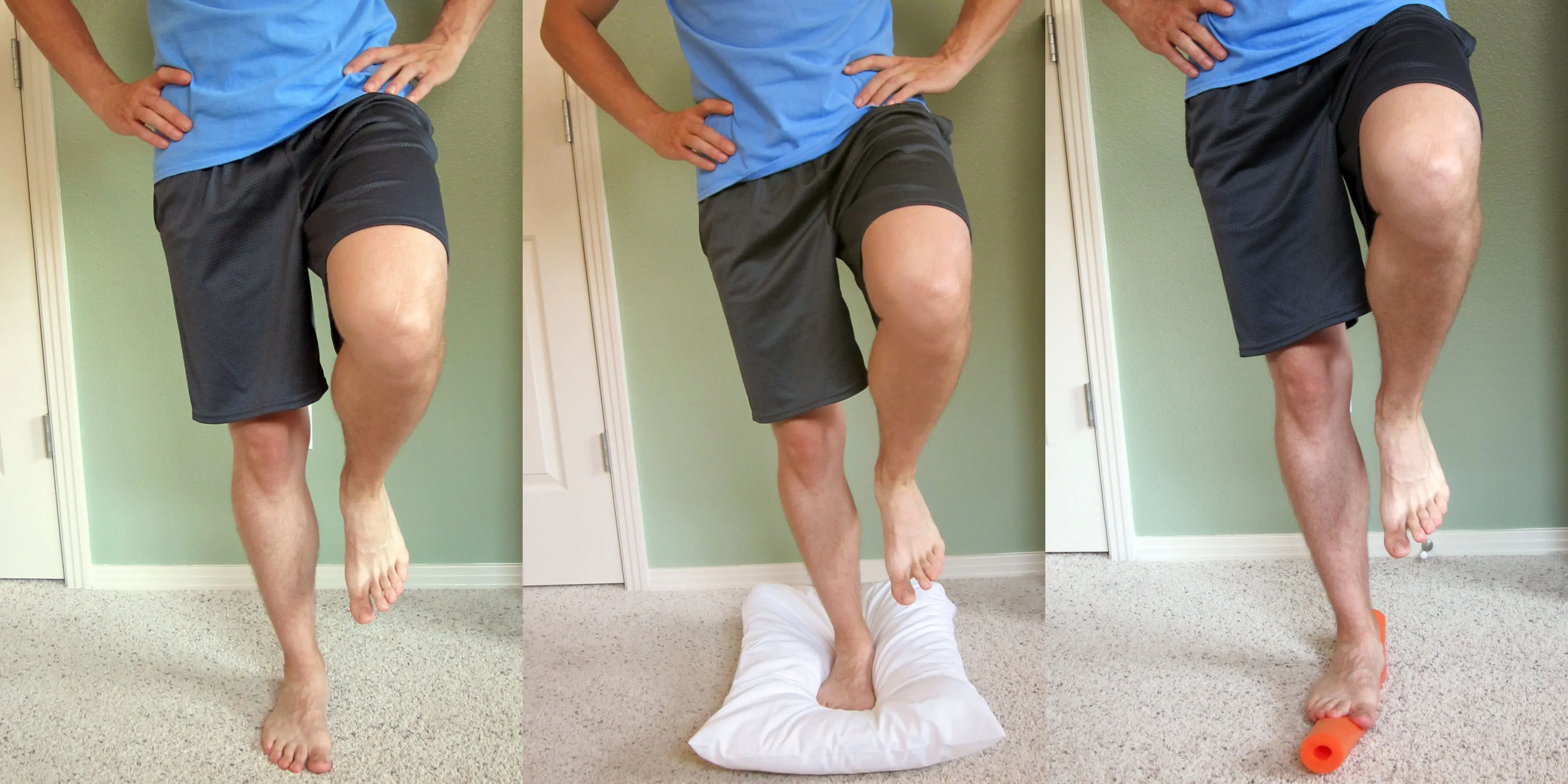
Standing on one leg to challenge ankle, knee, hip, and core stability.
Dynamic Balance:
Maintaining control while walking, reaching, stepping, turning, or changing direction.
Weight-Shifting Exercises:
Moving body weight from one leg to another while maintaining controlled posture.
Uneven-Surface Training:
Appropriate balance surfaces may be used to challenge stability and proprioception.
Functional Balance:
Exercises may simulate everyday activities such as stepping over obstacles, climbing stairs, reaching, or changing direction.
What to Expect During Treatment
Your physiotherapist will first determine your current balance ability and identify situations in which you have difficulty maintaining stability.
You may begin with simple exercises performed near a stable support. As your control improves, exercises can become progressively more challenging.
Your physiotherapist may modify:
- Base of support
- Exercise speed
- Surface
- Number of movements
- Visual input
- Resistance
- Single-leg or double-leg stance
- Functional complexity
Safety is maintained throughout the session, especially when working with patients who have significant balance difficulties.
Balance Training After Injury
Following an ankle, knee, hip, or other lower-limb injury, balance and proprioception can be affected. Even when pain and strength improve, a person may still feel less stable during certain activities.
Balance training can therefore be incorporated into rehabilitation to help restore controlled weight-bearing and improve confidence during walking, stepping, and other functional movements.
Balance Training for Athletes
Athletes need good balance and proprioception for running, jumping, landing, cutting, and rapidly changing direction. Rehabilitation may progress from basic single-leg balance to more dynamic and sport-specific activities.
Depending on the sport, training may include single-leg control, landing exercises, agility drills, directional changes, and sport-specific movement training.
Balance and Proprioception Training
Balance training is closely related to proprioception, which is the body's ability to sense the position and movement of its joints and limbs.
Exercises that challenge balance can help improve the body's ability to respond to changes in position and maintain controlled movement. This can be particularly useful during rehabilitation following certain ankle and lower-limb injuries.
Balance Training as Part of Physiotherapy
Balance exercises are often combined with strengthening, gait retraining, joint mobilization, flexibility exercises, proprioception training, and functional rehabilitation.
The program is progressively adjusted according to the patient's improvement and functional goals.
At our physiotherapy clinic, Balance Training is customized according to your strength, mobility, coordination, balance ability, and daily activity requirements. Our physiotherapists use progressive and supervised exercises to help improve stability, body control, confidence, and functional movement for everyday activities, work, exercise, and sports.