Proprioception Training
Proprioception Training is a physiotherapy rehabilitation technique designed to improve the body's awareness of joint position, movement, balance, and coordination. Proprioception is the body's ability to sense where different parts of the body are positioned and how they are moving without having to look at them.
This internal awareness plays an important role in maintaining balance, controlling movement, and protecting joints during everyday activities and sports. Following an injury, surgery, prolonged inactivity, or certain musculoskeletal conditions, proprioception and movement control can become impaired. Proprioception training helps gradually retrain the body to respond appropriately to changes in position, movement, and balance.
How Proprioception Training Works
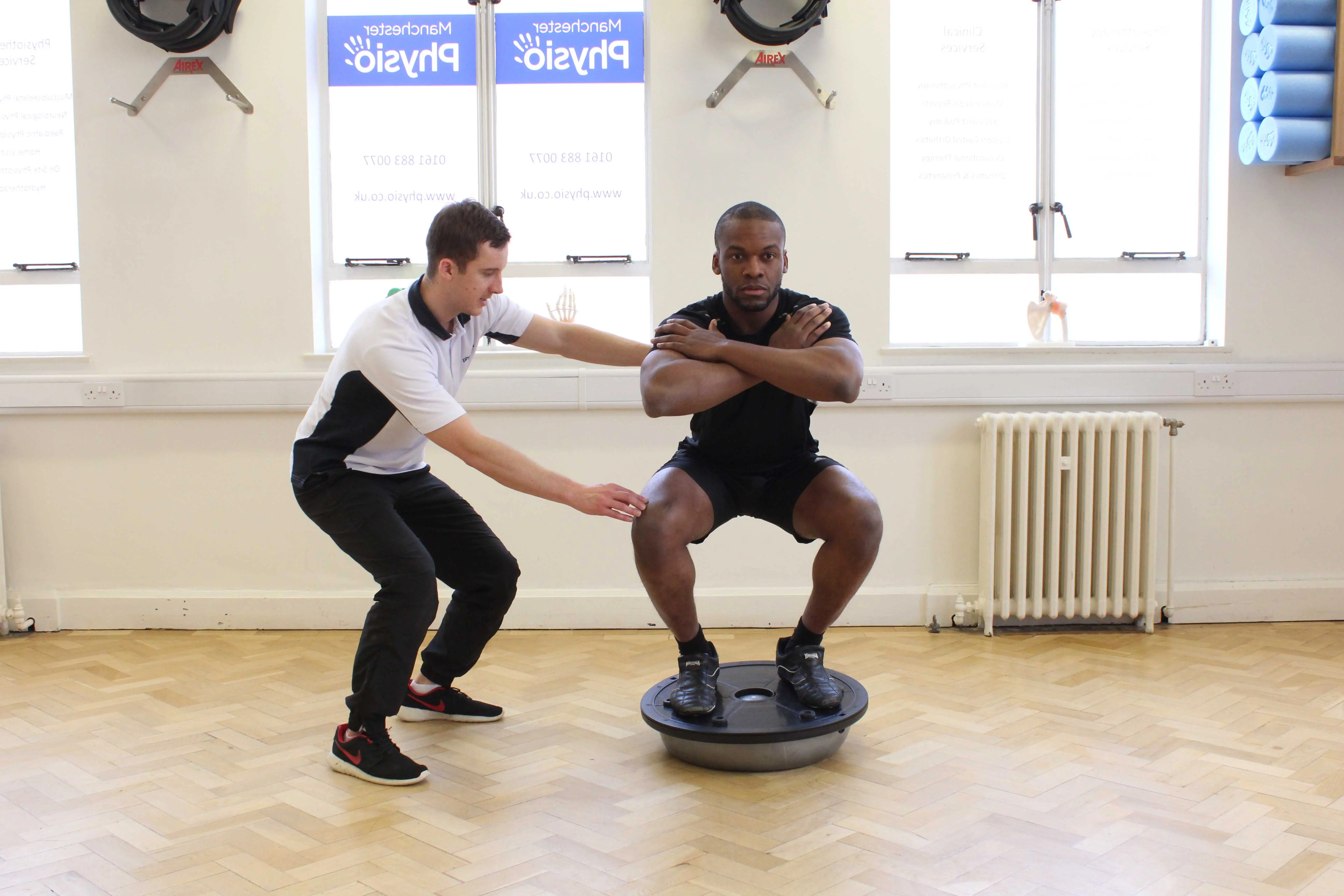
Proprioception exercises challenge the body's sensory and movement systems through controlled activities. Depending on the patient's condition, exercises may involve standing on one leg, maintaining balance on an unstable surface, changing direction, reaching while maintaining stability, or performing controlled movements with reduced visual input.
The physiotherapist selects exercises according to the patient's current balance, strength, coordination, injury status, and functional requirements. Exercises are gradually progressed as control and confidence improve.
For example, a patient recovering from an ankle injury may initially practice standing steadily on both feet, then progress to single-leg standing, balance-board exercises, reaching activities, and eventually sport-specific movements.
Conditions That May Benefit
Proprioception training may be incorporated into rehabilitation for:
- Ankle sprains and instability
- Knee injuries
- Ligament injuries
- Shoulder instability
- Post-surgical rehabilitation
- Sports injuries
- Balance and coordination difficulties
- Joint instability
- Recurrent musculoskeletal injuries
- Reduced movement confidence
- Lower-limb weakness affecting stability
Benefits of Proprioception Training
When appropriately prescribed, proprioception training may help:
- Improve balance and stability
- Enhance joint position awareness
- Improve coordination
- Develop better movement control
- Strengthen stabilizing muscles
- Improve confidence during movement
- Support recovery after injury
- Reduce the risk of certain recurrent injuries
- Improve performance during functional and sporting activities
What to Expect During Treatment
Before beginning proprioception training, the physiotherapist evaluates your balance, strength, coordination, joint stability, movement patterns, and functional limitations.
Exercises are then selected according to your current ability. You may begin with simple controlled movements and gradually progress toward more challenging activities.
Training may include:
- Single-leg balance
- Weight-shifting exercises
- Balance-board activities
- Stability exercises
- Reaching and controlled movement tasks
- Direction-change exercises
- Step and landing exercises
- Sport-specific balance drills
The physiotherapist monitors your technique throughout the session to ensure that exercises are performed safely and effectively.
Proprioception Training for Sports Rehabilitation
Proprioception is especially important for athletes because sports often require rapid changes in direction, jumping, landing, acceleration, and deceleration. After an injury, athletes may need to retrain their ability to control the affected joint during these movements.
A progressive program may begin with basic balance exercises and gradually advance to dynamic movements, agility drills, jumping, landing, and sport-specific activities. This helps prepare the athlete for a safe and confident return to training and competition.
Proprioception and Injury Prevention
Good proprioception helps the body respond quickly when balance or joint position changes unexpectedly. Training can improve neuromuscular control and the ability to stabilize the body during everyday and athletic movements.
Although proprioception training cannot eliminate the possibility of injury, it can be an important component of a broader injury-prevention and rehabilitation program when combined with appropriate strength, mobility, technique, and conditioning exercises.
Proprioception Training as Part of Rehabilitation
Proprioception training is generally combined with strengthening, flexibility, mobility, balance, and functional exercises. The program is progressively adjusted as the patient's strength, stability, coordination, and confidence improve.
At our physiotherapy clinic, Proprioception Training is designed according to your individual condition and rehabilitation goals. Our physiotherapists use progressive exercises to improve balance, coordination, joint awareness, and movement control, helping you regain confidence and return safely to everyday activities, exercise, and sports.