Functional Knee Rehabilitation
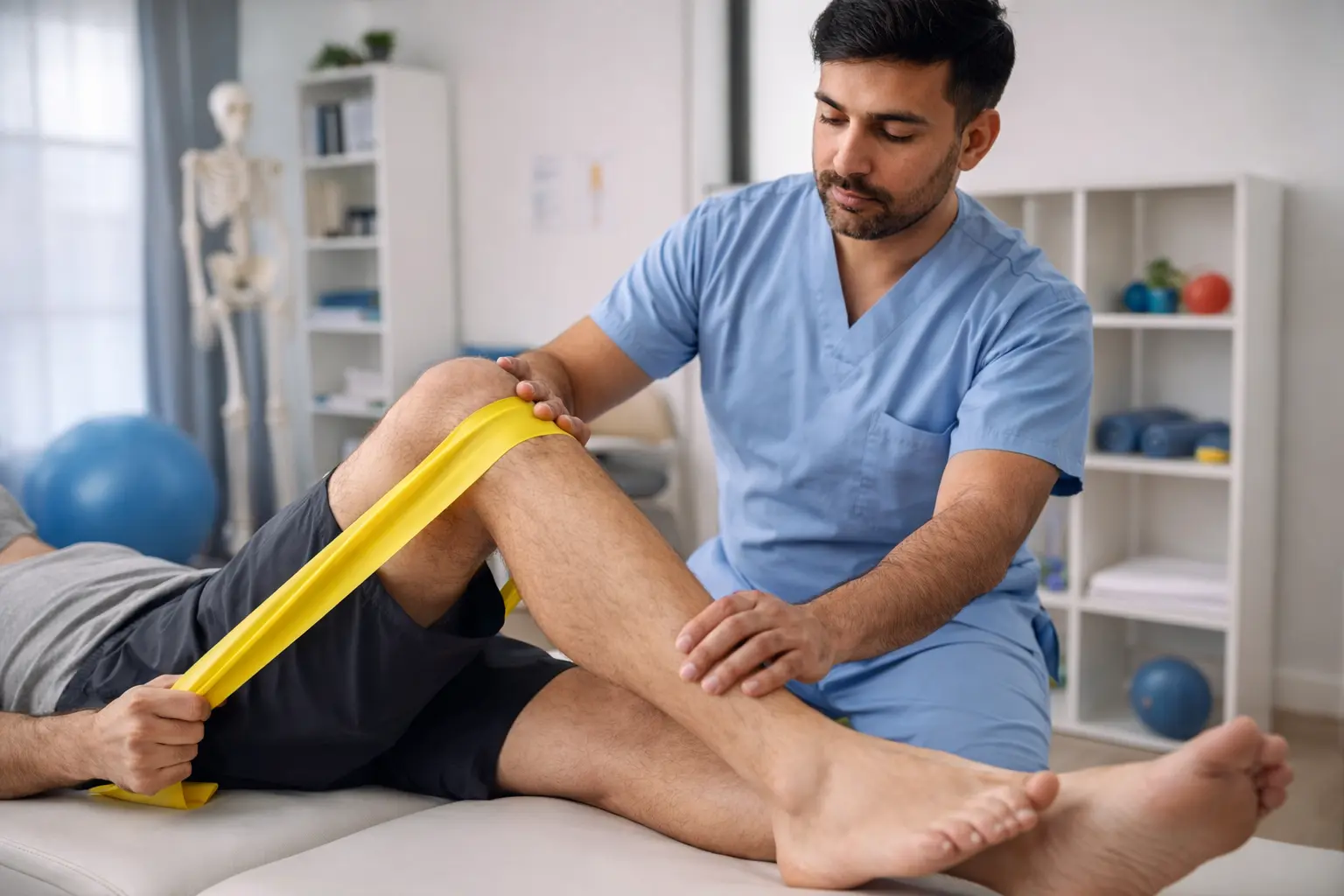
Functional Knee Rehabilitation is a structured physiotherapy program designed to restore strength, mobility, stability, coordination, and confidence following a knee injury, surgery, or condition that has affected normal movement. Rather than focusing only on pain relief, functional rehabilitation aims to help the knee gradually return to the movements and activities required in everyday life, work, exercise, and sports.
Knee problems can affect walking, climbing stairs, sitting and standing, squatting, running, jumping, and other normal activities. Reduced strength in the quadriceps, hamstrings, glutes, and surrounding muscles can further affect knee stability and movement control. A progressive rehabilitation program helps address these limitations while gradually increasing the demands placed on the knee.
How Functional Knee Rehabilitation Works
The rehabilitation process begins with an individual assessment of your knee movement, strength, flexibility, balance, stability, walking pattern, and functional limitations. Your physiotherapist also considers your injury, surgery, activity level, and personal rehabilitation goals.
Based on the assessment, a progressive treatment program is developed. Early rehabilitation may focus on controlling discomfort and swelling, restoring knee movement, and activating weakened muscles. As the knee becomes stronger, exercises are progressed to include functional movements such as squatting, stepping, balancing, lifting, walking, and controlled changes of direction.
The goal is to gradually increase the knee's ability to tolerate everyday and physical activities without unnecessary stress.
Conditions That May Benefit
Functional Knee Rehabilitation may be incorporated into treatment for:
- Knee ligament injuries
- Meniscus injuries
- Patellar problems
- Knee osteoarthritis
- Knee stiffness
- Sports-related knee injuries
- Muscle weakness following knee injury
- Rehabilitation following knee surgery
- Knee instability
- Reduced balance and movement control
- Difficulty walking, climbing stairs, or squatting
Key Components of Knee Rehabilitation
A personalized rehabilitation program may include:
Range-of-Motion Exercises:
Gentle exercises designed to restore the ability to bend and straighten the knee.
Strengthening Exercises:
Progressive strengthening for the quadriceps, hamstrings, glutes, calves, and other muscles that support knee function.
Balance and Stability Training:
Exercises designed to improve control of the knee and lower limb during standing and movement.
Functional Movement Training:
Activities such as sit-to-stand movements, step-ups, squats, and controlled lunges may be introduced according to the patient's stage of recovery.
Gait Training:
Walking patterns may be assessed and corrected when pain, weakness, or injury has affected normal walking.
Proprioception Training:
Balance and joint-position exercises can help improve coordination and movement awareness.
Sport-Specific Rehabilitation:
For athletes, rehabilitation may gradually progress toward running, jumping, landing, agility, and sport-specific movements.
Benefits of Functional Knee Rehabilitation
When appropriately designed and progressed, rehabilitation may help:
- Improve knee strength
- Restore flexibility and range of motion
- Improve balance and stability
- Improve walking and movement patterns
- Build confidence in the affected leg
- Improve tolerance for daily activities
- Support recovery following injury or surgery
- Prepare the knee for exercise and sports
- Reduce the risk of movement-related problems during return to activity
What to Expect During Treatment
Your physiotherapist will regularly assess your progress and modify the rehabilitation program according to your response. Exercises are typically progressed gradually rather than increasing difficulty too quickly.
You may begin with simple movements and gradually progress to resistance exercises, balance activities, functional movements, and higher-level activities. The exact progression depends on your diagnosis, symptoms, strength, healing stage, and individual goals.
Your physiotherapist may also provide a home exercise program so that rehabilitation can continue between clinic sessions.
Return to Daily Activities and Sports
For patients who want to return to sports or physically demanding activities, functional rehabilitation can progress beyond basic strengthening. Advanced exercises may include running drills, jumping and landing exercises, agility movements, directional changes, and sport-specific tasks.
Before returning to demanding activities, the physiotherapist may assess strength, balance, movement quality, and functional performance to determine whether the knee is ready for increased physical demands.
Personalized Functional Knee Rehabilitation
Every knee condition requires a different rehabilitation approach. The exercises and progression used after a ligament injury may differ considerably from those used for arthritis, a meniscus problem, or post-surgical recovery.
At our physiotherapy clinic, Functional Knee Rehabilitation is designed around your individual condition, activity level, and recovery goals. Our physiotherapists combine mobility work, progressive strengthening, balance training, movement retraining, and functional exercises to help restore knee function and support a safe return to everyday activities, exercise, and sports.