Muscle Strengthening Therapy
Muscle Strengthening Therapy is a structured physiotherapy approach designed to improve muscle strength, endurance, stability, and functional performance. Muscle weakness can develop following an injury, surgery, prolonged inactivity, poor movement patterns, chronic musculoskeletal problems, or periods of reduced physical activity. Weak muscles may make everyday activities such as walking, climbing stairs, lifting, reaching, standing, or exercising more difficult.
The goal of strengthening therapy is to progressively challenge the muscles so they can gradually become stronger and better able to support the joints and control movement. Exercises are selected and progressed according to the patient's condition, current strength, activity level, and rehabilitation goals.
How Muscle Strengthening Therapy Works
The physiotherapist begins with an assessment of muscle strength, joint mobility, balance, movement patterns, and functional limitations. Based on these findings, an individualized strengthening program is developed.
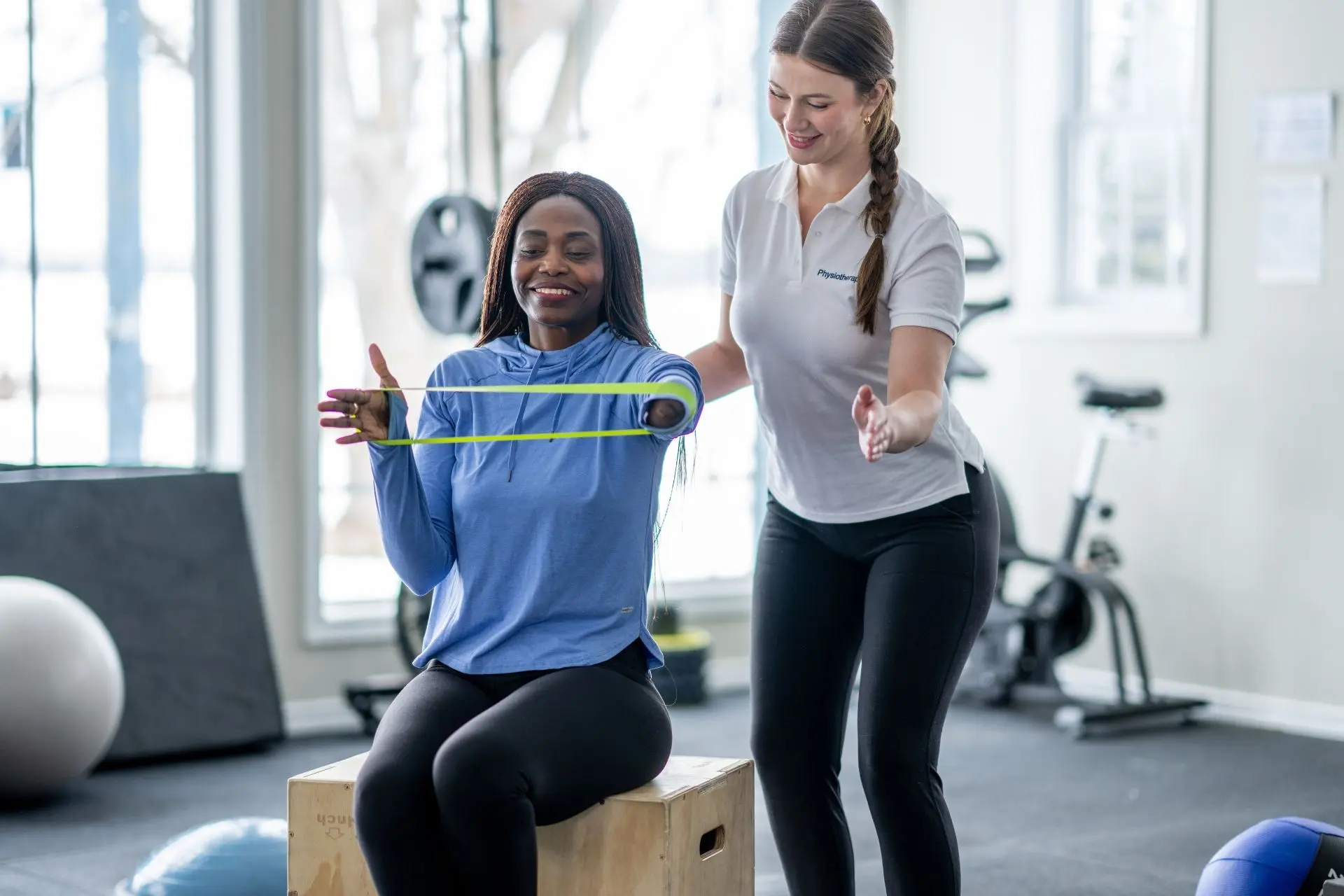
Exercises may initially use body weight or very light resistance. As the muscles become stronger and the patient develops better movement control, resistance and exercise difficulty can gradually be increased.
Depending on the condition, strengthening may involve isometric, concentric, eccentric, resistance-band, body-weight, machine-based, or free-weight exercises.
Conditions That May Benefit
Muscle Strengthening Therapy may be incorporated into rehabilitation for:
- Muscle weakness
- Knee pain and weakness
- Shoulder rehabilitation
- Hip weakness
- Back rehabilitation
- Sports injuries
- Post-surgical rehabilitation
- Joint instability
- Reduced physical conditioning
- Balance and movement-control problems
- Age-related muscle weakness
- Recovery following periods of inactivity
Benefits of Muscle Strengthening Therapy
When appropriately prescribed, strengthening therapy may help:
- Increase muscle strength
- Improve muscular endurance
- Improve joint stability
- Support better posture
- Improve balance and coordination
- Improve movement control
- Increase tolerance for physical activity
- Make everyday activities easier
- Support recovery following injury or surgery
- Prepare the body for exercise and sports
Stronger muscles can provide better support around joints and help the body perform movements more efficiently.
Types of Strengthening Exercises
Your physiotherapist may select different types of exercises depending on your rehabilitation stage.
Isometric Exercises:
The muscle contracts without significant joint movement. These may be useful during certain stages of rehabilitation when movement needs to be limited.
Resistance Exercises:
Resistance bands, weights, machines, or other forms of resistance can be used to progressively challenge the muscles.
Body-Weight Exercises:
Movements such as squats, bridges, lunges, push-ups, and step-ups can develop functional strength.
Functional Strengthening:
Exercises are designed around everyday movements such as standing from a chair, climbing stairs, lifting, reaching, or walking.
Progressive Strength Training:
Resistance and exercise difficulty are gradually increased as strength and tolerance improve.
What to Expect During Treatment
Before beginning strengthening exercises, your physiotherapist assesses your current strength and movement ability. Exercises are then selected at an appropriate starting level.
You may begin with simple movements and gradually progress to more challenging exercises. Your physiotherapist will monitor your technique, posture, joint alignment, and movement control throughout the session.
The resistance, repetitions, sets, movement range, and exercise difficulty may be adjusted regularly according to your progress.
Muscle Strengthening for Injury Rehabilitation
After an injury, muscles around the affected area may become weaker because of pain, reduced activity, or immobilization. Gradual strengthening can help restore the capacity needed to perform normal movements.
For example, after a knee injury, rehabilitation may progressively strengthen the quadriceps, hamstrings, glutes, and calf muscles. Following a shoulder problem, exercises may focus on the rotator cuff, shoulder stabilizers, and surrounding muscles.
The specific program depends on the injury and stage of recovery.
Strengthening for Sports Rehabilitation
Athletes often require higher levels of strength and muscular endurance to tolerate running, jumping, lifting, changing direction, and other sport-specific demands.
Sports rehabilitation may therefore progress from basic strengthening exercises to heavier resistance, single-limb exercises, explosive movements, agility training, and sport-specific drills when appropriate.
Muscle Strengthening as Part of Rehabilitation
Strengthening therapy is usually combined with other physiotherapy treatments such as mobility exercises, stretching, balance training, proprioception exercises, manual therapy, posture correction, and functional rehabilitation.
The objective is not simply to make a muscle stronger but to improve how strength is used during real-life movement.
At our physiotherapy clinic, Muscle Strengthening Therapy is customized according to your condition, strength level, activity requirements, and rehabilitation goals. Our physiotherapists use progressive exercises to help improve strength, stability, endurance, movement control, and confidence during everyday activities, exercise, work, and sports.