Lumbar Traction Therapy
Lumbar Traction Therapy is a physiotherapy treatment technique designed to provide controlled traction to the lower back, particularly the lumbar spine. It may be used as part of a comprehensive rehabilitation program for selected patients experiencing lower-back pain, stiffness, or symptoms associated with certain spinal conditions.
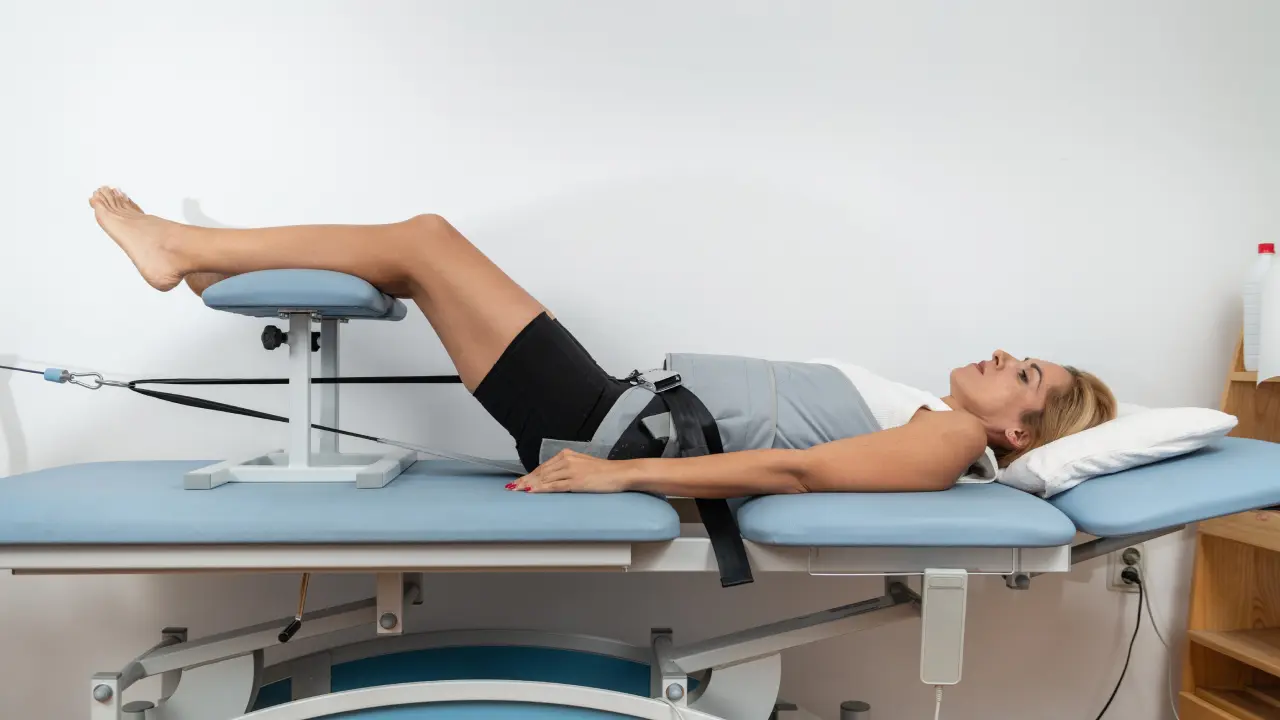
During traction, a carefully controlled pulling force is applied along the length of the lumbar spine. The amount of force, duration, and treatment position are adjusted by the physiotherapist according to the patient's condition, symptoms, and treatment goals.
How Lumbar Traction Therapy Works
The lumbar spine consists of vertebrae, discs, joints, muscles, ligaments, and nerves that work together to support the body and allow movement. Certain conditions may cause discomfort or sensitivity around these structures.
During lumbar traction, the patient is positioned comfortably, usually lying down, while a traction device or manual technique applies a controlled longitudinal force to the lower back.
The therapist determines the appropriate traction parameters based on the patient's assessment. Treatment may be performed intermittently or continuously depending on the technique being used.
Traction is generally considered an adjunct to physiotherapy, rather than a standalone solution. It may be combined with exercises and other rehabilitation techniques when appropriate.
Conditions That May Benefit
Depending on individual assessment, lumbar traction may be considered as part of rehabilitation for selected cases of:
- Lower-back pain
- Lumbar stiffness
- Certain lumbar disc-related conditions
- Some cases of radiating leg symptoms
- Reduced lumbar mobility
- Mechanical lower-back problems
- Certain degenerative spinal conditions
Not every patient with back pain is suitable for traction. A physiotherapist should assess the underlying condition before treatment.
Potential Benefits of Lumbar Traction
When appropriately prescribed, lumbar traction may help:
- Provide temporary relief of lower-back discomfort
- Reduce the sensation of spinal pressure or tightness in some patients
- Improve comfortable spinal movement
- Reduce muscle guarding in selected cases
- Support relaxation of the lower-back region
- Make movement and exercise more comfortable for some patients
- Complement an active rehabilitation program
The response to traction varies between individuals, and treatment is adjusted based on how the patient responds.
What to Expect During Treatment
Before starting treatment, your physiotherapist will assess your symptoms, spinal movement, strength, posture, neurological signs, and functional limitations.
You will be positioned comfortably on the treatment table. The traction system is then applied according to the prescribed settings.
You may feel a gentle pulling or stretching sensation through the lower back. The therapist monitors your symptoms throughout the session and can adjust or stop the treatment if necessary.
Lumbar Traction for Disc-Related Symptoms
Some patients with certain disc-related conditions may experience symptoms that extend from the lower back toward the buttock or leg. In selected cases, traction may be considered as one component of treatment.
However, traction is not appropriate for every disc problem, and it should not be assumed to physically "put a disc back in place." A proper clinical assessment is necessary to determine whether traction is suitable.
Lumbar Traction and Exercise Therapy
Active rehabilitation is an important part of managing many lower-back conditions. Depending on the patient's needs, traction may be combined with:
- Core strengthening
- Lumbar mobility exercises
- Hip strengthening
- Muscle stretching
- Postural exercises
- Movement-control training
- Functional rehabilitation
- Education on safe movement
These exercises help build strength and movement capacity so that the patient can gradually return to normal activities.
What Happens After Traction?
Some patients may experience temporary improvement in comfort or movement following treatment. Your physiotherapist may use this opportunity to introduce appropriate mobility or strengthening exercises.
The long-term rehabilitation plan focuses on improving movement, strength, functional capacity, and confidence rather than relying solely on passive treatment.
Safety and Professional Assessment
Lumbar traction is not suitable for everyone. Patients with certain spinal, neurological, vascular, bone, or other medical conditions may require alternative treatment or additional medical assessment.
For this reason, lumbar traction should be performed under the guidance of a qualified physiotherapist after an appropriate assessment. If symptoms such as significant weakness, progressive numbness, or changes in bladder or bowel control occur, prompt medical evaluation is important.
Personalized Lumbar Traction Therapy
At our physiotherapy clinic, Lumbar Traction Therapy is provided following an individual assessment of your back condition, symptoms, movement, and functional limitations. Where appropriate, traction may be incorporated with strengthening, mobility, posture, and functional exercises to support comfortable movement and a gradual return to everyday activities, work, and exercise.