Tennis Elbow Rehabilitation
Tennis Elbow Rehabilitation is a structured physiotherapy program designed to reduce pain, restore strength and flexibility, and improve the function of the elbow and forearm. Despite its name, tennis elbow is not limited to tennis players. It commonly involves irritation or overload of the tendons on the outer side of the elbow and can occur in people who frequently use their hands and wrists for work, exercise, sports, or repetitive activities.
The rehabilitation process focuses on more than simply reducing pain. It aims to gradually improve the capacity of the affected muscles and tendons to tolerate everyday activities and physical loads while addressing contributing factors such as poor movement patterns, excessive repetitive loading, weakness, or inadequate recovery.
How Tennis Elbow Rehabilitation Works
The physiotherapist begins with an assessment of your pain, elbow and wrist movement, grip strength, muscle flexibility, functional limitations, and the activities that may be aggravating your symptoms.
Based on the assessment, a progressive rehabilitation program is developed. Early treatment may focus on reducing aggravating activities, maintaining comfortable movement, and managing symptoms. As symptoms improve, strengthening exercises are gradually introduced to improve the capacity of the wrist and forearm muscles.
The level of resistance and exercise difficulty is progressively increased according to your response. This gradual loading approach helps prepare the tissues for everyday activities, work, exercise, and sports.
Conditions That May Benefit
Tennis elbow rehabilitation may be appropriate for patients experiencing:
- Pain on the outer side of the elbow
- Forearm muscle tightness
- Reduced grip strength
- Pain while gripping or lifting objects
- Discomfort during wrist movements
- Repetitive strain-related elbow problems
- Sports-related elbow pain
- Work-related overuse symptoms
- Difficulty performing daily hand and arm activities
Key Components of Rehabilitation
A personalized tennis elbow rehabilitation program may include:
Pain and Activity Management:
Identifying movements and activities that aggravate symptoms and modifying them appropriately while maintaining suitable levels of activity.
Wrist and Forearm Exercises:
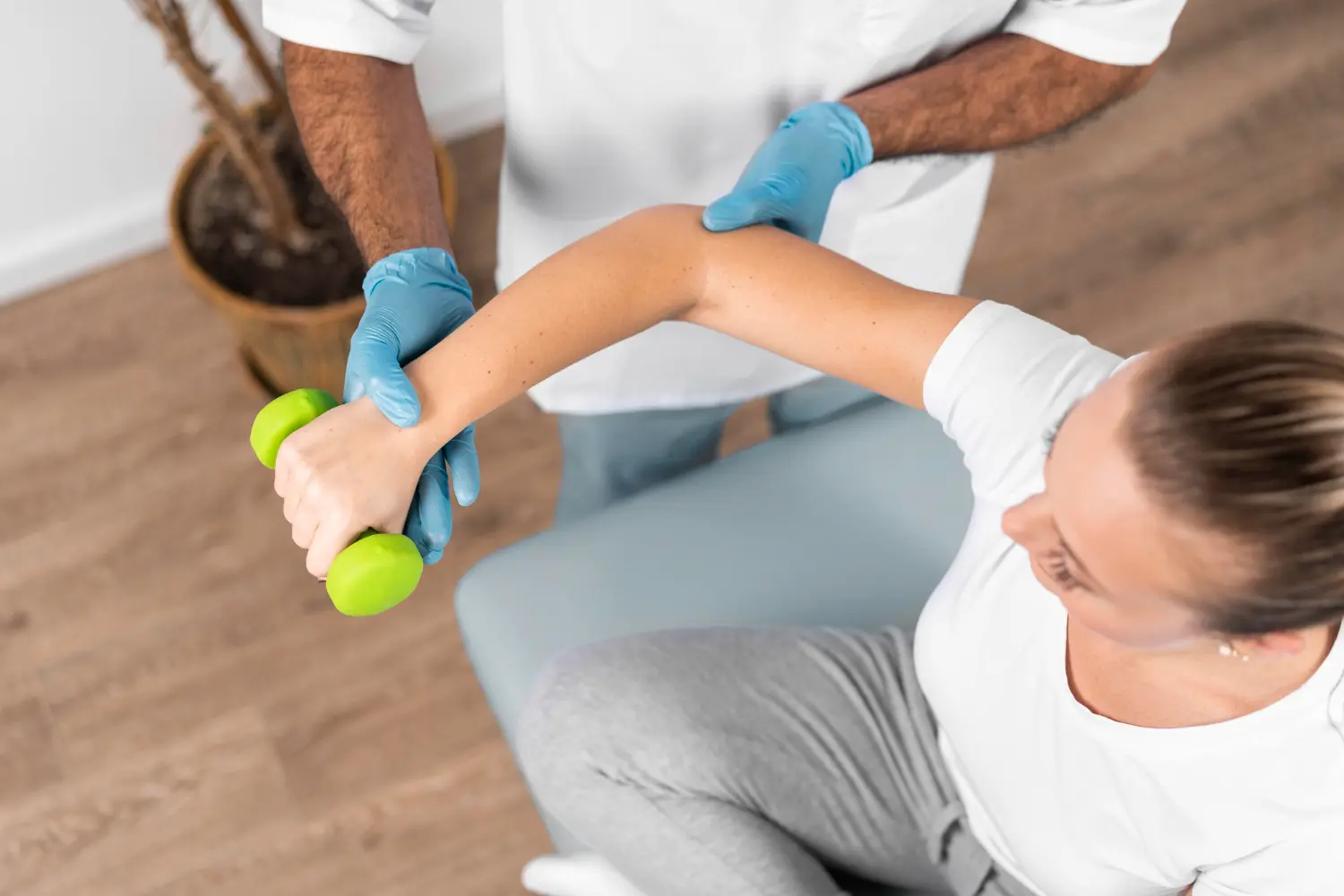
Progressive exercises designed to improve the strength and endurance of the muscles that control the wrist and forearm.
Grip Strengthening:
Controlled gripping exercises may be introduced as symptoms allow to improve functional hand strength.
Stretching and Mobility:
Appropriate stretching and mobility exercises may help maintain flexibility in the wrist, forearm, and elbow.
Eccentric and Progressive Strengthening:
Gradually increasing resistance can help improve the ability of the affected tissues to tolerate physical loading.
Manual Therapy:
Techniques such as soft-tissue therapy, joint mobilization, or other hands-on approaches may be incorporated when clinically appropriate.
Functional Rehabilitation:
Exercises can be progressed toward the specific activities that are important to the patient, including work tasks, exercise, or sports.
Benefits of Tennis Elbow Rehabilitation
A structured rehabilitation program may help:
- Reduce elbow discomfort
- Improve grip strength
- Restore wrist and forearm strength
- Improve flexibility and mobility
- Increase tolerance to daily activities
- Improve arm function
- Reduce movement-related limitations
- Support a gradual return to exercise and sports
- Improve confidence when using the affected arm
What to Expect During Treatment
Your physiotherapist will monitor your symptoms and physical performance throughout the rehabilitation process. Exercises are introduced at an appropriate level and gradually progressed as your strength and tolerance improve.
You may begin with simple mobility and low-load strengthening exercises before progressing to resistance-band exercises, weights, grip training, and functional movements. The program may also include guidance on workstation setup, lifting techniques, repetitive activities, and ways to manage physical load.
Your home exercise program is an important part of rehabilitation, as consistent and progressive exercise helps build the strength and capacity required for long-term recovery.
Return to Work, Exercise, and Sports
For people whose symptoms are related to work or sport, rehabilitation can gradually progress toward the specific demands of their activity. Tennis players and other athletes may eventually perform racket-control exercises, gripping activities, forearm strengthening, and sport-specific drills.
The physiotherapist can assess strength, movement quality, grip capacity, and tolerance to activity before progressing the patient toward higher physical demands.
Personalized Tennis Elbow Rehabilitation
Every case of tennis elbow can present differently, so the rehabilitation program should be adapted to the individual's symptoms, physical demands, and recovery goals.
At our physiotherapy clinic, Tennis Elbow Rehabilitation combines progressive strengthening, mobility exercises, activity guidance, and appropriate manual therapy to help restore elbow and forearm function. Our goal is to help you gradually return to comfortable daily activities, work, exercise, and sports while improving the strength and capacity of the affected arm.