Eccentric Exercise Therapy
Eccentric Exercise Therapy is a physiotherapy exercise approach that focuses on strengthening muscles while they are lengthening under controlled resistance. During an eccentric contraction, a muscle remains active while gradually extending, allowing it to control a movement against gravity or an external load.
This type of exercise is widely used in rehabilitation because it can help improve muscle strength, control, and the ability of muscles and tendons to tolerate physical load. It may be incorporated into treatment for certain tendon problems, muscle injuries, sports injuries, and rehabilitation following periods of weakness or reduced activity.
How Eccentric Exercise Therapy Works
During an eccentric exercise, the muscle controls the movement as it lengthens. For example, when slowly lowering a weight during a biceps exercise, the biceps remains active while the elbow gradually straightens. Similarly, slowly lowering the body during a squat involves eccentric work from several muscles around the hips and knees.
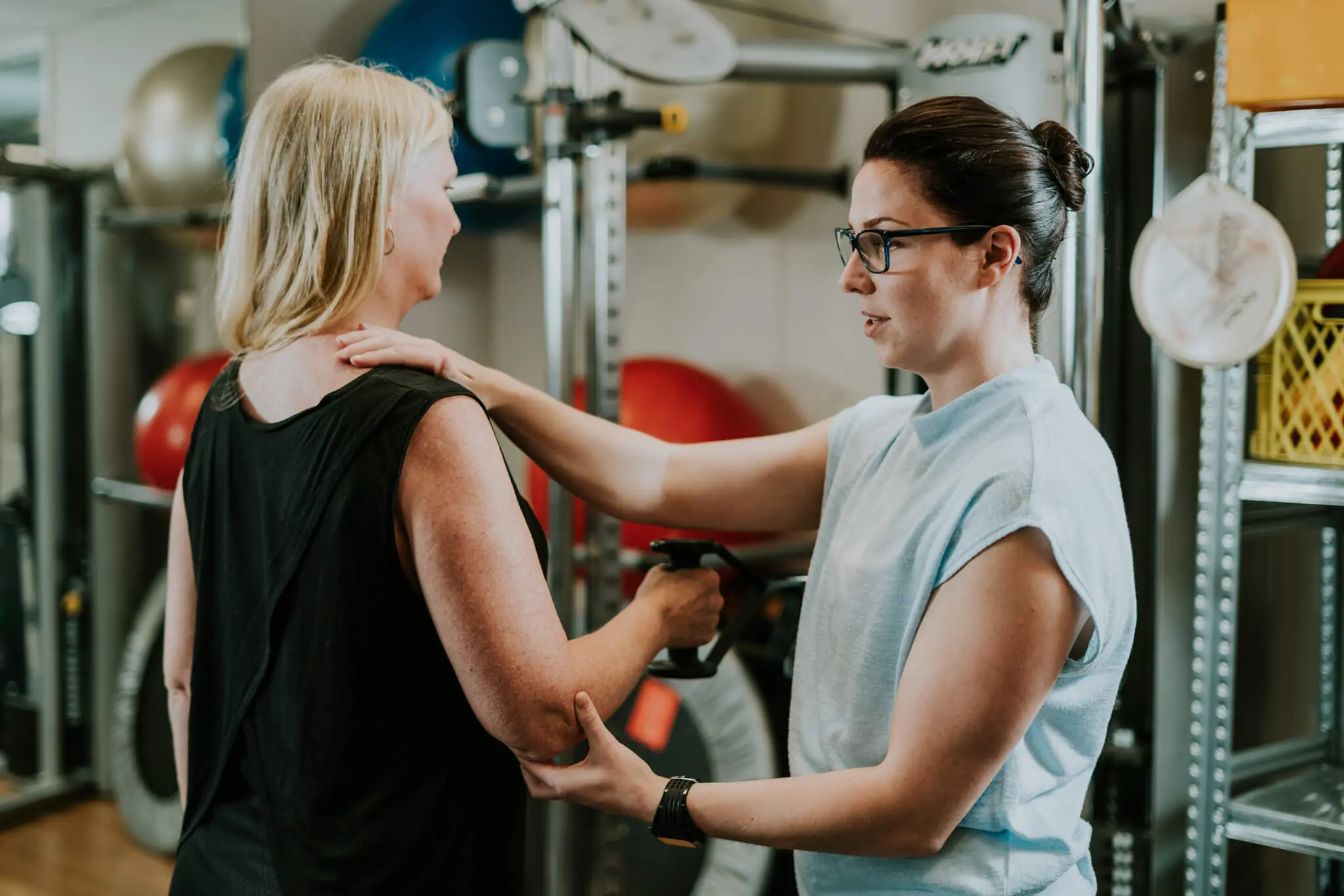
The physiotherapist selects exercises based on the patient's condition, strength, pain response, and rehabilitation goals. The movement is performed slowly and with controlled resistance to ensure that the targeted muscles are working appropriately.
As strength improves, the exercise can be progressed by increasing resistance, repetitions, movement range, or functional difficulty.
Conditions That May Benefit
Depending on the patient's assessment, eccentric exercise therapy may be incorporated into rehabilitation for:
- Tendon-related conditions
- Tennis elbow
- Achilles tendon problems
- Patellar tendon problems
- Muscle strains
- Sports-related injuries
- Muscle weakness
- Reduced muscular endurance
- Post-injury rehabilitation
- Certain chronic musculoskeletal conditions
- Functional weakness following periods of inactivity
Benefits of Eccentric Exercise Therapy
When appropriately prescribed, eccentric exercises may help:
- Improve muscle strength
- Increase muscular control
- Improve the ability of muscles to tolerate load
- Support tendon rehabilitation
- Improve muscular endurance
- Restore functional movement
- Improve stability around joints
- Prepare the body for physical activity and sports
- Support a gradual return to normal activities
Eccentric training can be particularly useful when rehabilitation requires gradual exposure to increasing physical loads.
Common Eccentric Exercises
Depending on the body region and condition, a physiotherapist may prescribe exercises such as:
- Slow heel-lowering exercises for the calf
- Controlled step-down exercises
- Slow squat lowering
- Eccentric wrist exercises
- Controlled biceps lowering
- Eccentric hamstring exercises
- Slow resistance-band movements
- Controlled lowering during functional exercises
The exact exercise, resistance, speed, and number of repetitions are selected according to the patient's individual requirements.
What to Expect During Treatment
Before beginning eccentric exercise therapy, the physiotherapist assesses your strength, movement, pain response, flexibility, and functional limitations.
You will be taught how to perform each exercise with correct technique and controlled movement. Initially, exercises may be performed using body weight, light resistance, resistance bands, or assisted movements.
As your strength and tolerance improve, the physiotherapist gradually increases the workload. Proper technique is emphasized throughout the program to ensure that the intended muscles and tissues are being appropriately loaded.
Some muscle soreness can occur after strengthening exercises, particularly when beginning a new program. Your physiotherapist will help distinguish normal exercise-related soreness from symptoms that indicate the need to modify the exercise.
Eccentric Exercise for Tendon Rehabilitation
Eccentric exercises are frequently incorporated into rehabilitation programs for certain tendon problems because progressive loading can help improve the ability of the muscle-tendon unit to tolerate physical demands.
For example, a patient with an appropriate Achilles or patellar tendon condition may begin with controlled, low-load exercises and gradually progress toward higher resistance and functional movements.
The exercise program should be individualized because not every tendon condition responds to the same loading strategy.
Eccentric Exercise for Sports Rehabilitation
Athletes require muscles and tendons to control high levels of force during running, jumping, landing, deceleration, and changes of direction. Eccentric strength is therefore an important part of many sports rehabilitation programs.
Once basic strength has been established, exercises can progress toward more dynamic and sport-specific activities. This may include controlled landing drills, deceleration exercises, running progressions, and other movements relevant to the athlete's sport.
Eccentric Exercise Therapy as Part of Rehabilitation
Eccentric exercise is generally combined with mobility exercises, stretching, balance training, strengthening, functional exercises, and activity-specific rehabilitation.
At our physiotherapy clinic, Eccentric Exercise Therapy is designed according to your condition, current strength, activity level, and rehabilitation goals. Our physiotherapists progressively adjust resistance and exercise difficulty to help improve muscle capacity, movement control, and confidence during everyday activities, exercise, and sports.