Kinesio Taping
Kinesio Taping is a physiotherapy technique that uses a flexible, elastic therapeutic tape applied to the skin to provide support and sensory feedback without significantly restricting normal movement. It is commonly used as a supportive treatment for musculoskeletal conditions, sports injuries, muscle discomfort, swelling, and movement-related problems.
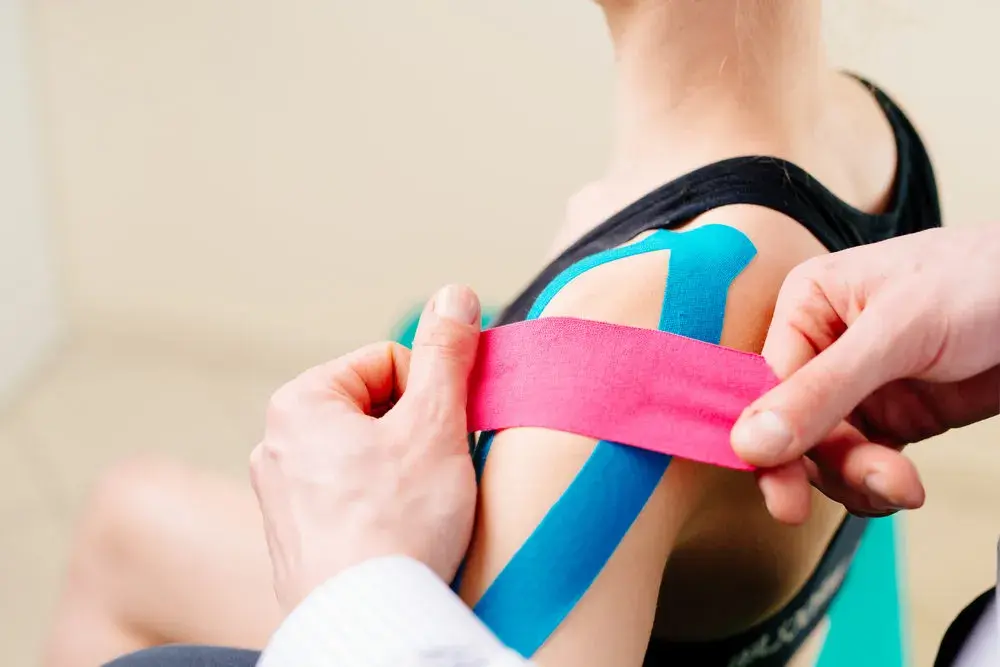
Unlike rigid athletic tape, kinesiology tape is designed to stretch and move with the body. The physiotherapist applies the tape in specific patterns and with an appropriate level of tension based on the patient's condition and treatment goals. The technique may be used to support muscles and joints, improve movement awareness, and complement other physiotherapy treatments.
How Kinesio Taping Works
Kinesiology tape is applied directly to the skin over or around the affected area. Depending on the application technique, the tape may provide gentle mechanical support and stimulate sensory receptors in the skin.
This additional sensory input may help a patient become more aware of the position and movement of a particular body part. In some cases, the tape may also be used as part of a treatment approach for localized swelling or soft-tissue discomfort.
The exact application depends on the area being treated. A physiotherapist may use different taping patterns for the neck, shoulder, back, knee, ankle, wrist, or other areas.
Conditions That May Benefit
Depending on the patient's assessment, Kinesio Taping may be incorporated into physiotherapy treatment for:
- Neck and shoulder discomfort
- Back pain
- Knee pain
- Ankle and foot problems
- Sports-related injuries
- Muscle strains
- Joint support and movement control
- Postural and movement-related problems
- Certain soft-tissue injuries
- Swelling associated with some musculoskeletal conditions
Benefits of Kinesio Taping
When clinically appropriate, kinesiology taping may help:
- Provide temporary support to affected areas
- Improve movement awareness
- Assist with muscle and joint control
- Reduce discomfort during certain activities
- Support rehabilitation exercises
- Encourage appropriate movement patterns
- Provide additional support during physical activity
- Complement other physiotherapy techniques
Kinesio taping is generally intended to support rehabilitation rather than replace active treatment. Its effectiveness can vary depending on the condition and individual patient.
What to Expect During Treatment
Before applying the tape, the physiotherapist assesses your symptoms, movement patterns, posture, and functional limitations. The skin is cleaned and prepared so that the tape can adhere properly.
The physiotherapist then selects the appropriate tape length, direction, and application technique. The tape is carefully placed over the targeted area, with the amount of stretch determined by the intended purpose of the application.
You may feel a gentle pulling or supportive sensation after the tape is applied. The tape is designed to move with your body, allowing you to continue many normal movements and prescribed exercises.
Kinesio Taping for Sports and Rehabilitation
Kinesio Taping can be useful as part of a sports rehabilitation program. Athletes may receive taping alongside strengthening, stretching, mobility exercises, balance training, and sport-specific rehabilitation.
For example, taping may be used to provide additional sensory feedback around the knee or shoulder while the patient works on strengthening and movement-control exercises. This allows the tape to complement the active rehabilitation process.
Personalized Kinesio Taping
The placement and application of kinesiology tape should be selected according to the patient's specific condition rather than using the same technique for everyone. Your physiotherapist considers the affected area, symptoms, movement limitations, skin condition, and rehabilitation goals before applying the tape.
At our physiotherapy clinic, Kinesio Taping is provided as part of an individualized treatment plan. Our physiotherapists use appropriate taping techniques to support movement, comfort, and rehabilitation while combining them with exercises and other physiotherapy interventions when required.