Gait Retraining
Gait Retraining is a physiotherapy rehabilitation approach designed to improve the way a person walks by addressing abnormal or inefficient movement patterns. Walking involves coordinated movement of the feet, ankles, knees, hips, pelvis, and trunk. Pain, injury, muscle weakness, joint stiffness, balance problems, neurological conditions, surgery, or long periods of altered movement can affect normal walking mechanics.
Gait retraining involves assessing the patient's walking pattern and identifying areas where movement, coordination, strength, balance, or weight distribution may be contributing to difficulty while walking. The physiotherapist then uses targeted exercises, movement practice, and functional training to help develop a safer and more efficient walking pattern.
How Gait Retraining Works
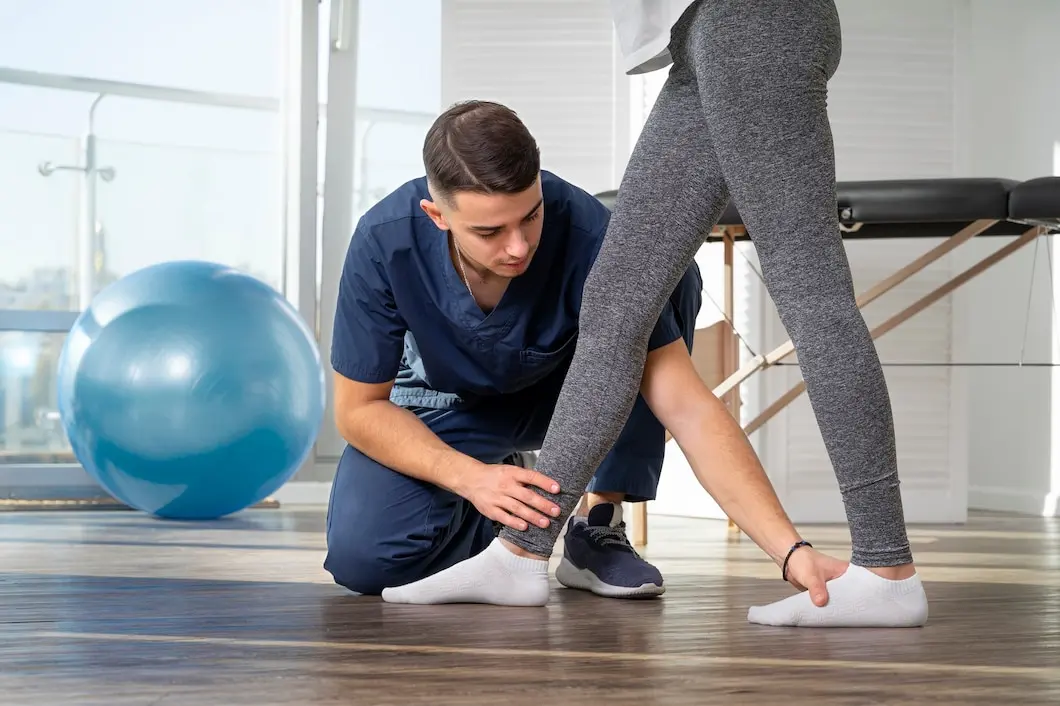
The physiotherapist begins with a detailed assessment of your walking pattern. This may include observing your step length, walking speed, foot placement, balance, posture, joint movement, weight shifting, and coordination.
The therapist may also assess muscle strength, joint mobility, balance, flexibility, and pain to understand factors that may be affecting your gait.
Based on the assessment, specific movement strategies and exercises are introduced. You may practice walking at different speeds, changing direction, stepping over obstacles, improving foot placement, or controlling the movement of the hips and knees.
The exercises are gradually progressed as your walking ability improves.
Conditions That May Benefit
Depending on the clinical assessment, gait retraining may be incorporated into rehabilitation for:
- Walking difficulties after injury
- Post-surgical rehabilitation
- Knee or hip problems
- Ankle and foot injuries
- Balance difficulties
- Muscle weakness affecting walking
- Reduced joint mobility
- Abnormal walking patterns
- Sports injury rehabilitation
- Recovery after prolonged immobilization
- Certain neurological or movement-related conditions
Benefits of Gait Retraining
When appropriately prescribed, gait retraining may help:
- Improve walking mechanics
- Improve balance and stability
- Develop better coordination
- Improve step control
- Increase walking confidence
- Improve functional mobility
- Encourage more efficient movement
- Improve tolerance for walking
- Support a gradual return to normal activities
The specific goals depend on the individual's condition and functional limitations.
What to Expect During Treatment
Your physiotherapist will first observe you walking and identify specific aspects of your gait that may require improvement.
You may begin with simple exercises designed to improve weight shifting, foot placement, balance, or joint control. Once these skills improve, you may practice them during actual walking.
Treatment can include:
- Step and stride training
- Weight-shifting exercises
- Foot-placement training
- Balance exercises
- Walking-speed practice
- Direction-change exercises
- Stair training
- Obstacle negotiation
- Lower-limb strengthening
- Functional movement training
Gait Retraining After Injury
Following an injury, people sometimes develop compensatory walking patterns to avoid discomfort or protect the affected area. Even after the original problem improves, these altered patterns may persist.
Gait retraining can help the patient gradually restore appropriate movement and confidence. The physiotherapist may combine walking practice with strengthening, mobility exercises, and balance training to address the factors contributing to the altered gait.
Gait Retraining After Surgery
After certain orthopedic procedures, patients may temporarily change the way they walk because of pain, weakness, swelling, restricted movement, or reduced confidence.
Gait rehabilitation can be progressively introduced according to the surgical protocol and healing stage. Training may include appropriate weight-bearing practice, walking technique, stair training, balance exercises, and strengthening.
Gait Retraining for Athletes
Athletes require efficient lower-limb mechanics for walking, running, jumping, and changing direction. Following injury, gait retraining may progress from basic walking mechanics to more demanding activities.
Depending on the sport, rehabilitation may eventually include running drills, landing mechanics, acceleration and deceleration exercises, balance training, and sport-specific movement patterns.
Gait Retraining and Lower-Limb Strength
Walking requires coordinated strength from the feet, calves, quadriceps, hamstrings, glutes, and core muscles. If weakness in one area affects walking mechanics, strengthening may be incorporated into the rehabilitation program.
Your physiotherapist may combine gait training with foot and ankle strengthening, knee strengthening, hip stabilization, balance exercises, and proprioception training.
Personalized Gait Rehabilitation
Every person's walking pattern is different, and the cause of an altered gait can vary. For this reason, gait retraining should be based on an individual assessment rather than applying the same walking technique to everyone.
At our physiotherapy clinic, Gait Retraining is customized according to your walking pattern, strength, balance, mobility, symptoms, and functional goals. Our physiotherapists use progressive walking and movement exercises to help improve coordination, stability, confidence, and functional mobility for everyday activities, work, exercise, and sports.