Foot Mobilization Therapy
Foot Mobilization Therapy is a hands-on physiotherapy technique used to improve the mobility, flexibility, and function of the joints and soft tissues of the foot. The foot contains numerous small joints that work together to absorb forces, maintain balance, and support the body during walking, standing, running, and other weight-bearing activities.
Injury, stiffness, prolonged immobilization, repetitive stress, or changes in normal movement patterns can restrict foot mobility and affect the way the entire lower limb functions. Foot mobilization uses controlled manual techniques to address appropriate areas of restricted movement and support a gradual return to comfortable and functional activity.
How Foot Mobilization Works
The physiotherapist first assesses the movement of the foot and ankle, including joint mobility, flexibility, swelling, strength, balance, and walking patterns. Specific areas of restriction are identified before treatment.
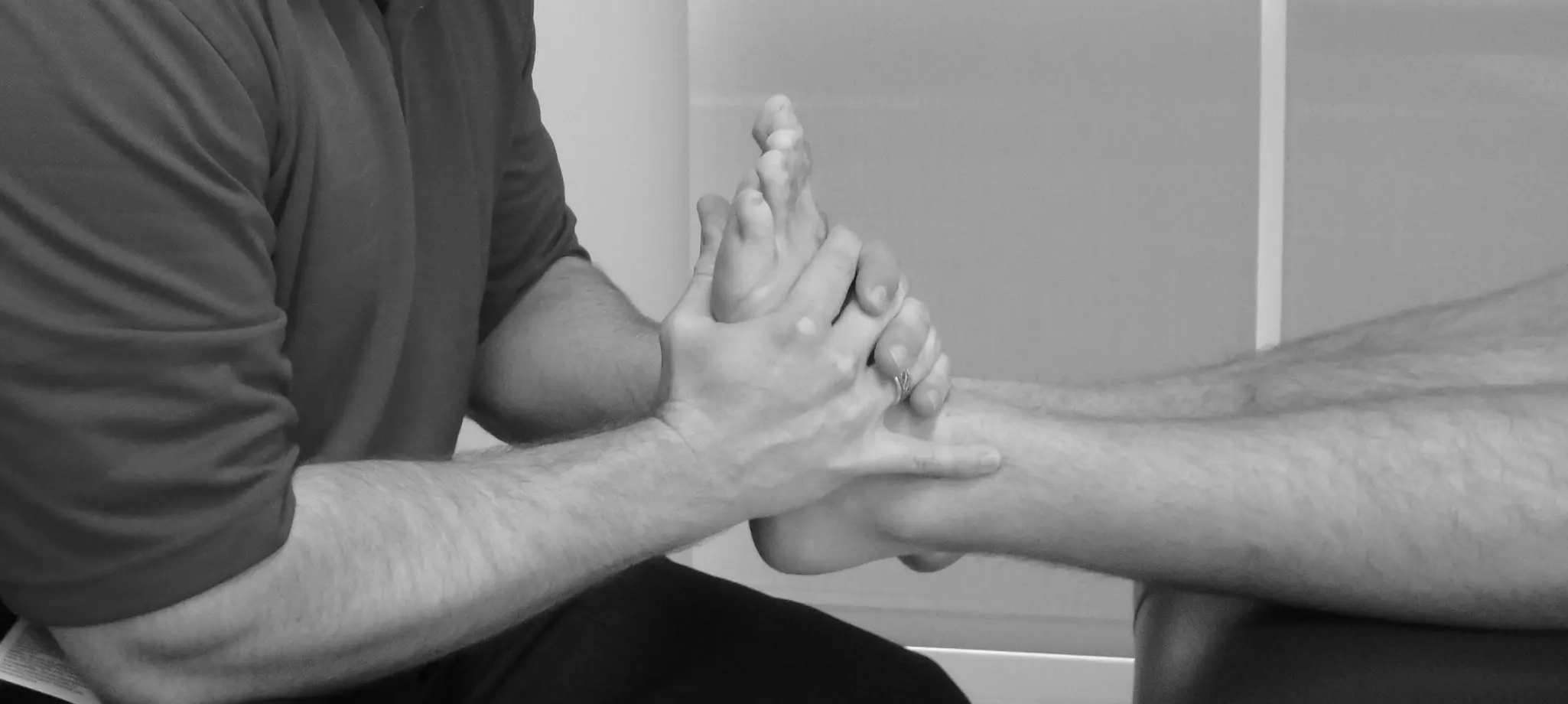
During treatment, the physiotherapist uses gentle and controlled manual movements on selected joints and surrounding tissues. Depending on the patient's condition, techniques may include joint gliding, gentle traction, passive movements, or soft-tissue mobilization.
The direction, intensity, and duration of treatment are carefully adjusted according to the patient's symptoms and rehabilitation stage.
Conditions That May Benefit
Depending on the clinical assessment, Foot Mobilization Therapy may be incorporated into rehabilitation for:
- Foot stiffness
- Reduced foot mobility
- Ankle and foot injuries
- Post-injury stiffness
- Recovery following appropriate foot or ankle surgery
- Sports-related foot problems
- Reduced range of motion
- Movement restrictions following immobilization
- Certain overuse-related foot conditions
- Walking and functional movement limitations
Benefits of Foot Mobilization Therapy
When clinically appropriate, foot mobilization may help:
- Improve foot joint mobility
- Reduce stiffness
- Increase comfortable range of motion
- Improve foot flexibility
- Support more efficient walking mechanics
- Improve weight-bearing movement
- Prepare the foot for therapeutic exercises
- Support recovery following appropriate injuries
- Improve overall lower-limb movement
Because the foot forms the foundation of the lower limb, improved mobility can contribute to better movement during walking, standing, balance activities, and exercise.
What to Expect During Treatment
Before treatment, your physiotherapist evaluates your foot and ankle movement, pain, swelling, flexibility, strength, balance, and walking pattern.
You will be positioned comfortably while the therapist supports the foot and applies controlled movements to the selected joints. You may feel gentle pressure, stretching, or movement around the joint.
The technique is performed within an appropriate range, and the therapist adjusts the pressure according to your condition and comfort.
Foot Mobilization After Injury
Following certain foot or ankle injuries, stiffness can develop because of swelling, reduced movement, or immobilization. Appropriate mobilization may be introduced as part of rehabilitation once it is safe to do so.
The timing and intensity depend on the specific injury and stage of healing. Your physiotherapist will assess your condition before progressing manual techniques.
Foot Mobilization and Exercise Therapy
Manual mobilization is often combined with active rehabilitation exercises to help maintain mobility and restore strength and movement control.
Depending on your condition, your program may include:
- Foot and ankle range-of-motion exercises
- Calf stretching
- Foot strengthening
- Toe exercises
- Balance training
- Proprioception exercises
- Gait training
- Functional weight-bearing exercises
This combination helps translate improved mobility into better functional movement.
Foot Mobilization for Sports Rehabilitation
Athletes place significant demands on their feet during running, jumping, landing, and changes of direction. Restrictions in foot mobility may affect movement mechanics and performance.
For athletes, foot mobilization may be combined with strengthening, balance training, proprioception, running drills, and sport-specific rehabilitation to gradually restore the ability to tolerate physical demands.
Personalized Foot Mobilization Therapy
The foot contains many interconnected joints, so the appropriate treatment depends on the specific area and cause of the restriction. Your physiotherapist considers your symptoms, injury history, mobility, strength, activity requirements, and rehabilitation goals before selecting the technique.
At our physiotherapy clinic, Foot Mobilization Therapy is provided following an individual assessment and under professional supervision. Treatment is tailored to your condition with the aim of improving foot mobility, reducing stiffness, restoring comfortable movement, and supporting a safe return to walking, work, exercise, and sports.